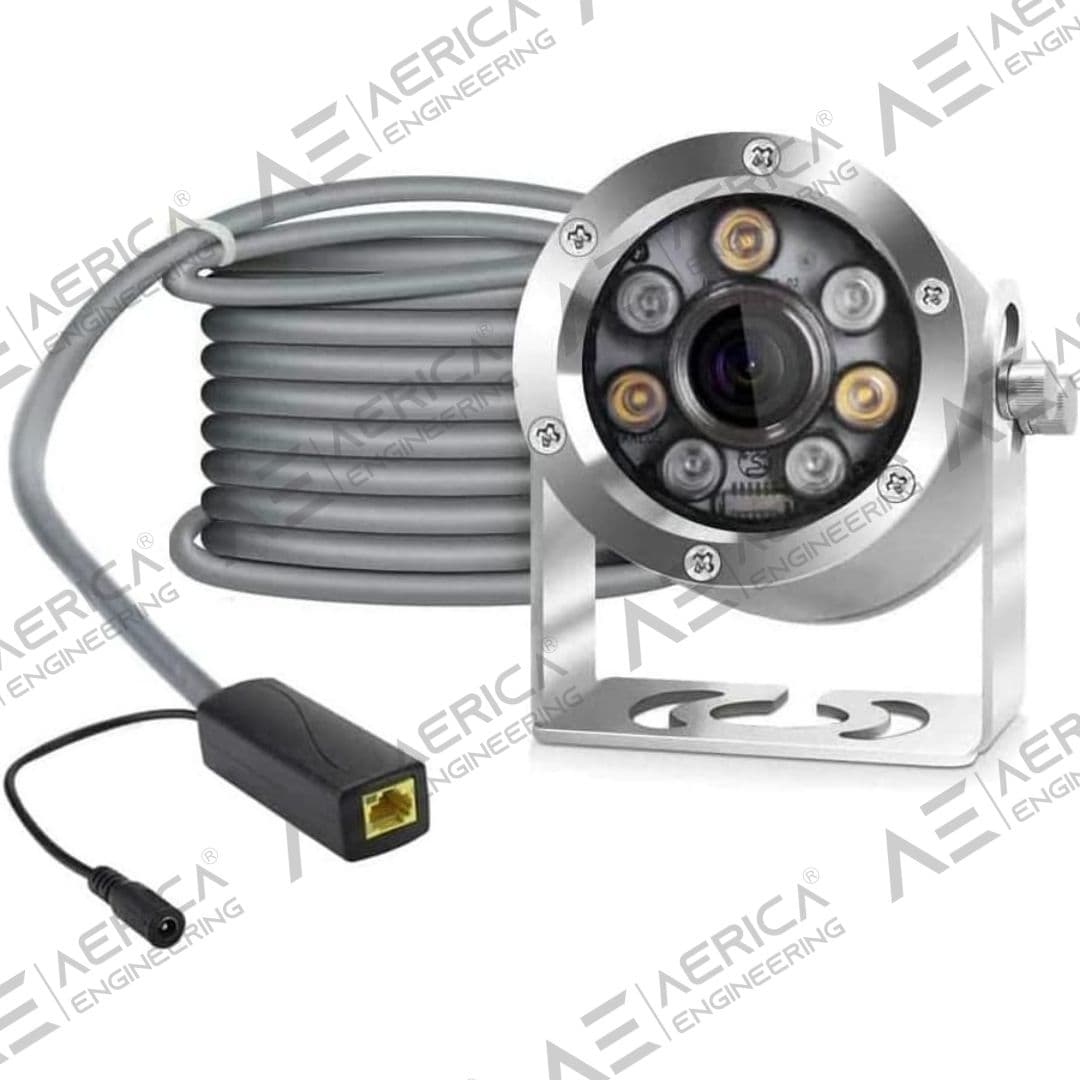
Underwater IP Camera
Industrial inspection equipment
Overview
An Industrial Underwater IP Camera is designed for organisations that require network-based visual monitoring of submerged structures, water infrastructure and other underwater environments. It can help industrial maintenance teams, water treatment operators, marine contractors and infrastructure managers monitor underwater conditions using compatible network-connected viewing systems. Unlike conventional inspection cameras that rely primarily on a dedicated display, an IP-based underwater camera can support network video monitoring, subject to its connectivity and system configuration. Depending on the selected model, compatible monitoring arrangements may include a computer, network video recorder or control-room display. This makes the technology relevant to applications where operators need to observe underwater conditions remotely or review visual information as part of routine maintenance. Selecting an Underwater IP Camera for Your Application The right underwater IP camera depends on the installation environment and the intended monitoring requirements. Buyers should assess the depth rating, waterproof housing, image resolution, network connectivity, power supply and compatibility with existing monitoring infrastructure. Freshwater reservoirs, industrial tanks, aquaculture facilities and marine environments can impose different operating requirements. For continuous monitoring, it is particularly important to confirm the supported operating duration, cable arrangement, power requirements and network availability. Buyers should also consider water clarity, illumination, camera placement and the distance between the submerged installation and the monitoring equipment. An underwater IP camera should be selected according to its documented operating limits rather than its general waterproof classification alone.
Key Highlights
- IP network connectivity
- Remote viewing capability
- Full HD 1080p resolution
- Deep water rated
- PoE (Power over Ethernet)
- Cloud recording option
- Multi-user access
- Mobile app support
Request a Quote
Get pricing, availability, and technical guidance.
Request QuoteResponse within 1 business day.
Technical Specifications
| Camera Type | IP Network Camera |
| Resolution | 1920x1080 Full HD |
| Depth Rating | 50 meters |
| Connectivity | Ethernet, WiFi |
| Power | PoE or 12V DC |
| Protocols | ONVIF, RTSP |
Applications
Remote underwater monitoring
Aquaculture inspection
Water treatment facilities
Marine research
Request Product Information
Fill out the form below and our team will get back to you with detailed information about the Underwater IP Camera.
Request a Quote
Interested in Underwater IP Camera? Fill out the form below and our team will get back to you within 24 hours.