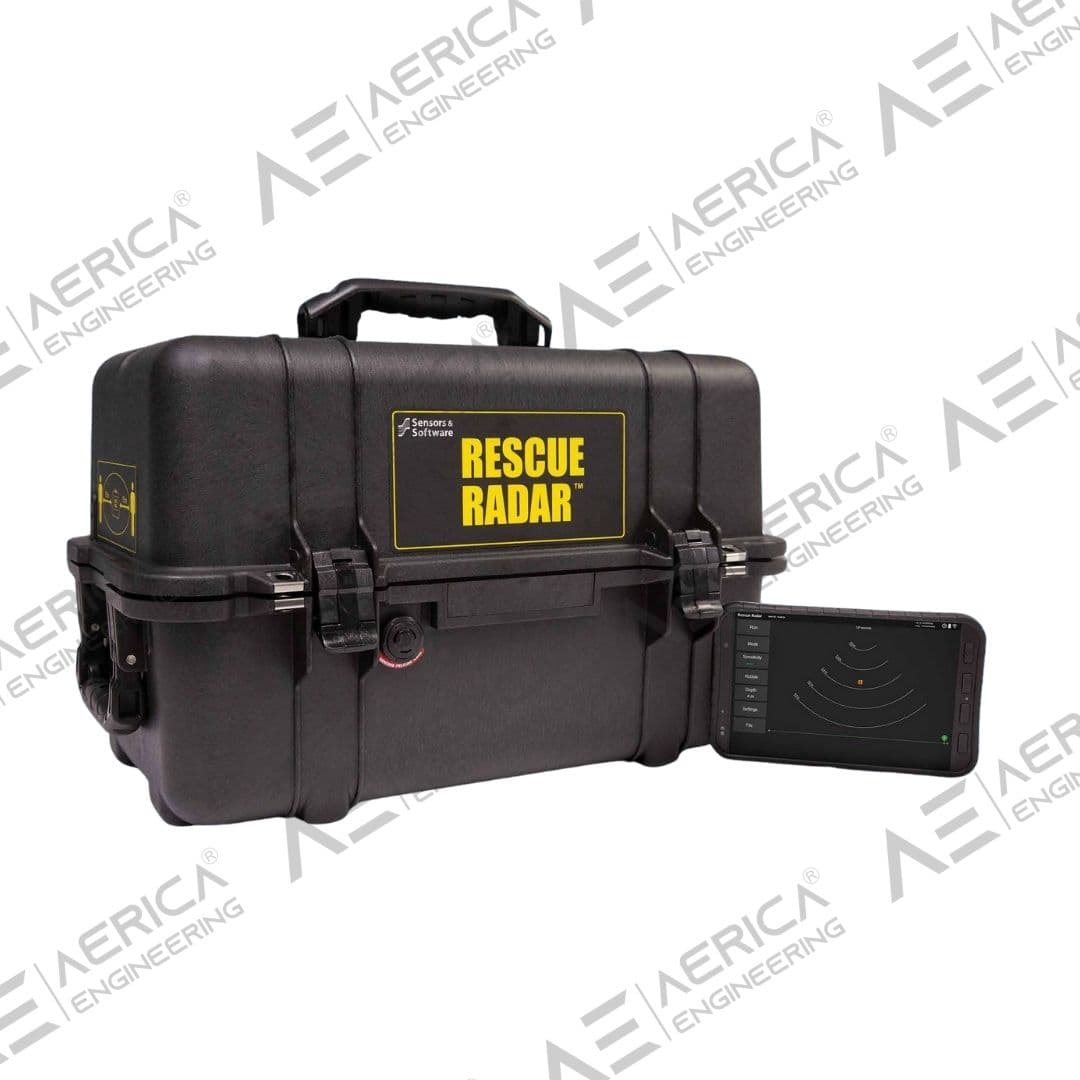
Rescue Radar System
Industrial inspection equipment
Overview
State-of-the-art life detection radar system designed for search and rescue operations. Detects human presence through concrete, rubble, snow, and other dense materials by identifying breathing patterns and heartbeat signals.
Rescue Radar System is configured with Detects breathing and heartbeat through debris, Penetrates concrete rubble and snow up to 10 meters, and Real-time signal processing and analysis to support reliable day-to-day inspection work in demanding operating conditions.
Key technical details include Detection Range: Up to 10 meters through debris, Detection Method: Life sign radar (breathing and heartbeat), Frequency Range: 1-5 GHz, and Detection Sensitivity: Breathing rate: 10-40 breaths/min, helping teams evaluate fitment, access requirements, and inspection coverage before deployment.
This product is suited to applications such as Search and rescue operations, Disaster response, and Earthquake response, where repeatable imaging, measurement, or defect detection performance is important.
Key Highlights
- Detects breathing and heartbeat through debris
- Penetrates concrete rubble and snow up to 10 meters
- Real-time signal processing and analysis
- Portable and rugged design for field operations
- Multiple detection modes for various scenarios
- Weather-resistant and shock-proof construction
- Intuitive interface for rapid deployment
- Battery operated with extended runtime
- Visual and audio victim location indicators
- Lightweight design for easy transport
Request a Quote
Get pricing, availability, and technical guidance.
Request QuoteResponse within 1 business day.
Technical Specifications
| Detection Range | Up to 10 meters through debris |
| Detection Method | Life sign radar (breathing and heartbeat) |
| Frequency Range | 1-5 GHz |
| Detection Sensitivity | Breathing rate: 10-40 breaths/min |
| Penetration Capability | Concrete, rubble, snow, wood |
| Operating Temperature | -20°C to 50°C |
| Weight | 3.5 kg with battery |
| Battery Life | 6-8 hours continuous operation |
| Display | Color LCD screen |
| Certifications | Military grade, USAR certified |
| Coverage Area | Adjustable detection cone |
| Dimensions | 30cm x 20cm x 15cm |
| Data Logging | Internal memory + USB export |
Applications
Search and rescue operations
Disaster response
Earthquake response
Building collapse assessment
Avalanche rescue
Mine rescue operations
Emergency management
Request Rescue Radar Information
Fill out the form below and our team will get back to you with detailed information about the Rescue Radar System.
Request a Quote
Interested in Rescue Radar System? Fill out the form below and our team will get back to you within 24 hours.
Operational Advantages
Rapid Detection
Quickly locate victims in critical time-sensitive rescue operations, saving precious minutes
Deep Penetration
Detect through concrete, rubble, snow, and other dense materials up to 10 meters deep
Life Detection
Identify signs of life including breathing and heartbeat patterns with high accuracy
Precise Location
Accurately pinpoint victim location to guide rescue efforts and optimize resource deployment